blog
Tree Roots in Drains: How CCTV Surveys and Root Cutting Solve the Problem
Tree roots are one of the most common hidden causes of drainage problems. From the surface, everything can look completely normal. The garden may look fine, the inspection chamber may be accessible, and water may still be moving through the system. But underground, roots can slowly force their way into the pipework and start restricting the flow.
Centra Drains recently attended a job where a CCTV drain survey identified roots inside the drainage system. Once the problem had been confirmed, the team used specialist root cutting equipment to remove the root growth, followed by high pressure water jetting to clear the remaining debris. The result was a clean, free flowing drain and a much clearer understanding of what had caused the issue.
This type of work is a great example of why proper inspection matters. Without a CCTV survey, root intrusion can easily be mistaken for a standard blockage. The drain may be cleared temporarily, but unless the roots are removed properly, the problem usually comes back.
Why Tree Roots Get Into Drains
Tree roots naturally grow towards moisture. Underground drainage pipes provide exactly what roots are looking for, especially if there is a tiny crack, loose joint or weak point in the pipe.
Roots do not need a large opening to get in. Even a small gap can be enough for fine roots to enter. Once inside, they continue to grow and spread through the pipework. Over time, they form a dense mass that catches waste, toilet paper, silt and other debris passing through the drain.
At first, the drain may only slow down slightly. As the roots grow thicker and more debris becomes trapped, the flow becomes more restricted. Eventually, this can lead to repeat blockages, overflowing inspection chambers or wastewater backing up.
The Warning Signs of Roots in Drains
Root intrusion is often difficult to spot because the damage is happening underground. Most customers only become aware of the issue once the drainage system starts behaving differently.
Common warning signs include slow draining toilets, sinks or showers, gurgling noises, bad smells, recurring blockages and water sitting in inspection chambers. In some cases, there may also be damp patches or unusually wet ground near trees, hedges or older drainage routes.
One of the biggest clues is repeat blockages. If the same drain keeps blocking after being cleared, there is often a deeper cause. Tree roots are one of the main possibilities, especially where mature trees or large shrubs are close to the drainage line.
Why a CCTV Drain Survey Is So Important
A CCTV drain survey allows engineers to see exactly what is happening inside the pipework. Instead of guessing where the problem is, a camera is fed through the drainage system to inspect the condition of the drains in real time.
On this recent job, the CCTV survey confirmed that roots had entered the drain and were restricting the flow. That meant the team could choose the right method to deal with the problem properly.
A CCTV survey can identify root intrusion, cracks, displaced joints, collapsed sections, heavy build up and other defects. It also helps show whether the pipe has simply been blocked by roots or whether there is damage that may need further repair.
This is useful because not all drain blockages should be treated in the same way. A normal build up of debris may only need jetting, but root growth usually needs cutting before the drain can be properly cleaned.
How Root Cutting Works
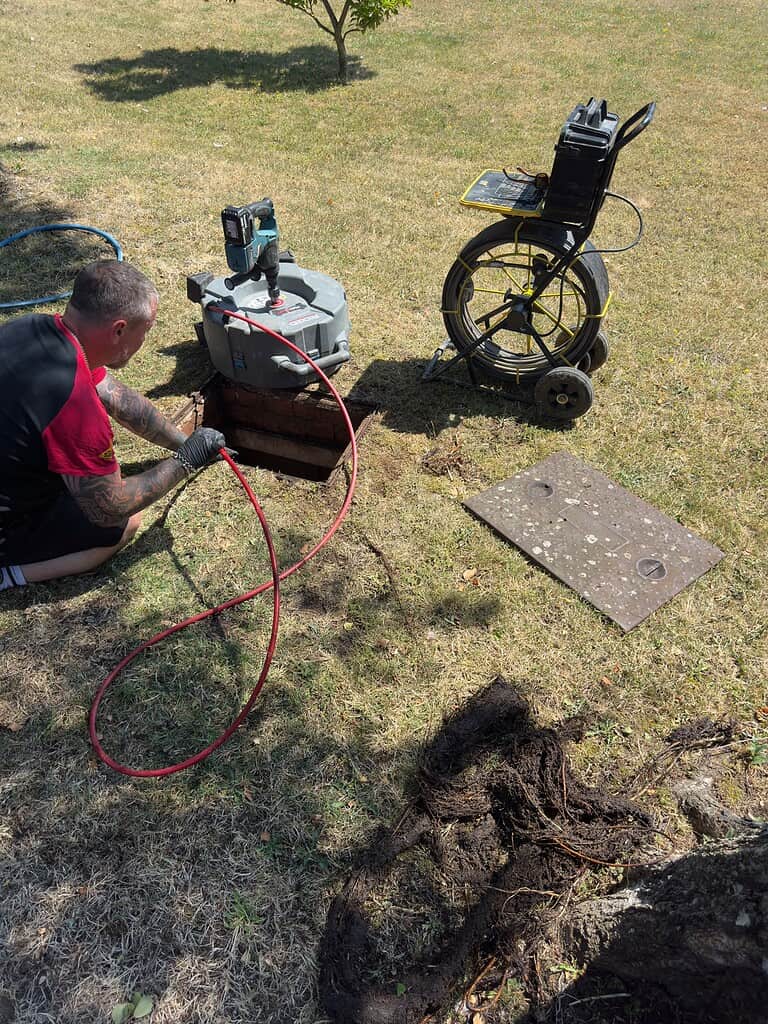
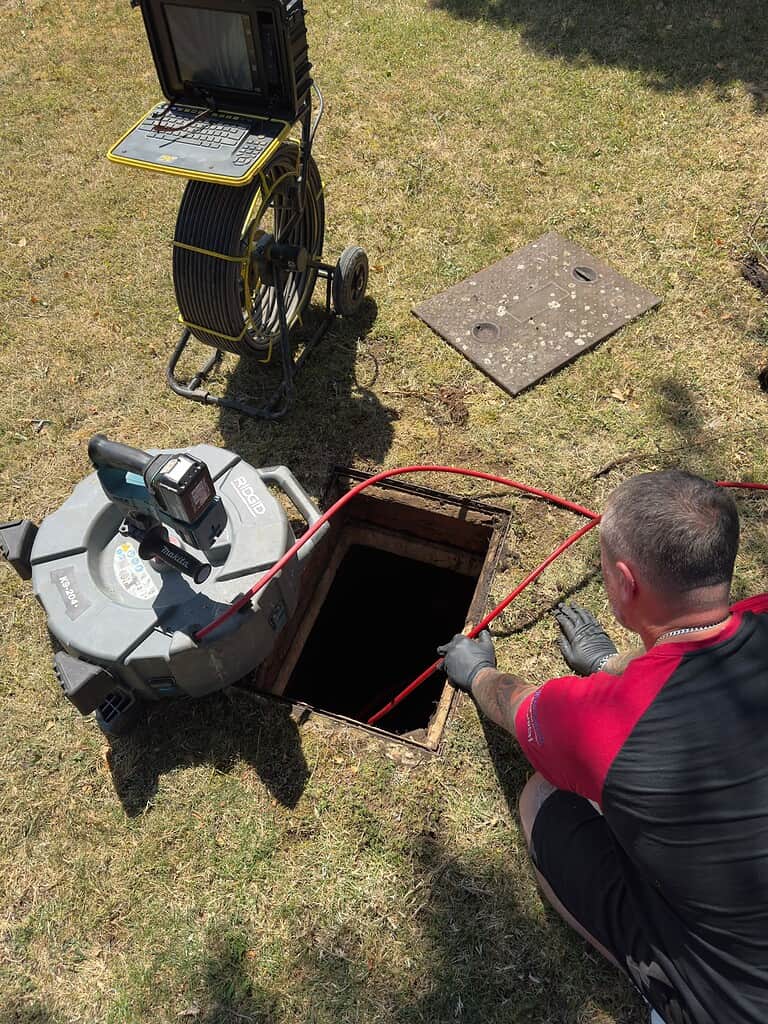
Once roots have been identified, specialist root cutting equipment is used to remove them from inside the pipe. The machine is designed to cut through root growth without unnecessary excavation.
The cutter is fed into the drainage system through an access point, such as an inspection chamber. It is then guided to the affected section and used to break down the roots that are blocking or restricting the pipe.
This is a much more targeted solution than trying to push the blockage through. The aim is to remove the root growth properly so water can move freely again.
On this job, the root cutting machine freed the problem roots from the drain, making it possible to clear the system properly afterwards.
Why High Pressure Jetting Is Used Afterwards
After the roots have been cut, there is often loose debris left inside the pipe. This can include root fragments, silt, mud and waste that had been trapped behind the blockage.
High pressure water jetting is then used to flush the drain clean. The jetter sends water through the pipe at force, clearing away the remaining debris and helping restore full flow.
Using root cutting and jetting together gives a much better result than using one method alone. Cutting removes the root obstruction, while jetting clears the drain so it can flow properly again.
This approach helped leave the drains on the recent job running freely again.
What Happens If Roots Are Left Untreated?
Tree roots will not disappear on their own. If they are left inside the drainage system, they will usually continue to grow and trap more debris.
Over time, this can lead to more frequent blockages, stronger smells, slower drainage and increased pressure on the pipework. If the roots have entered through a crack or damaged joint, the pipe may also continue to weaken.
In more serious cases, root intrusion can contribute to pipe fractures, joint displacement or collapsed drains. Catching the problem early often makes the repair simpler and less disruptive.
Can Roots Come Back?
Roots can return if the original entry point is not dealt with. Cutting and jetting can restore flow and remove the immediate obstruction, but if there is a crack, open joint or defect in the pipe, roots may eventually find their way back in.
That is why the CCTV survey is so useful. It does not just show the blockage. It can also show the condition of the pipe and whether any repair work may be worth considering.
Depending on the damage, options may include targeted patch repairs, drain lining or further maintenance. The right solution depends on what the camera survey shows.
Drain Root Removal in Swindon and Surrounding Areas
Centra Drains helps homeowners, landlords and businesses across Swindon and nearby areas with blocked drains, CCTV drain surveys, root cutting, drain jetting and drainage repairs.
Swindon has many properties with established gardens, mature trees and older drainage layouts, particularly around long standing residential areas. Where trees are close to drains, root intrusion is always something worth considering if blockages keep returning.
A proper survey gives clear answers and helps avoid repeated temporary fixes.
Final Thoughts
Tree roots in drains are a hidden problem, but they can cause serious disruption if ignored. What looks like a simple blockage may actually be a sign of root growth inside the pipework.
This recent job shows the value of using the right process. First, the CCTV survey identified the cause. Then the root cutting machine removed the problem roots. Finally, high pressure jetting cleared the remaining debris and restored flow.
If your drains keep blocking, smell unpleasant or drain more slowly than usual, it may be worth getting the system inspected properly. Finding the real cause early can save time, money and a lot of hassle later on.x`